
Bananas are one of the most commonly consumed fruits worldwide due to their affordability, convenience, and rich nutrient profile. However, among people living with diabetes, bananas often raise an important dietary question: are bananas safe for diabetic patients?
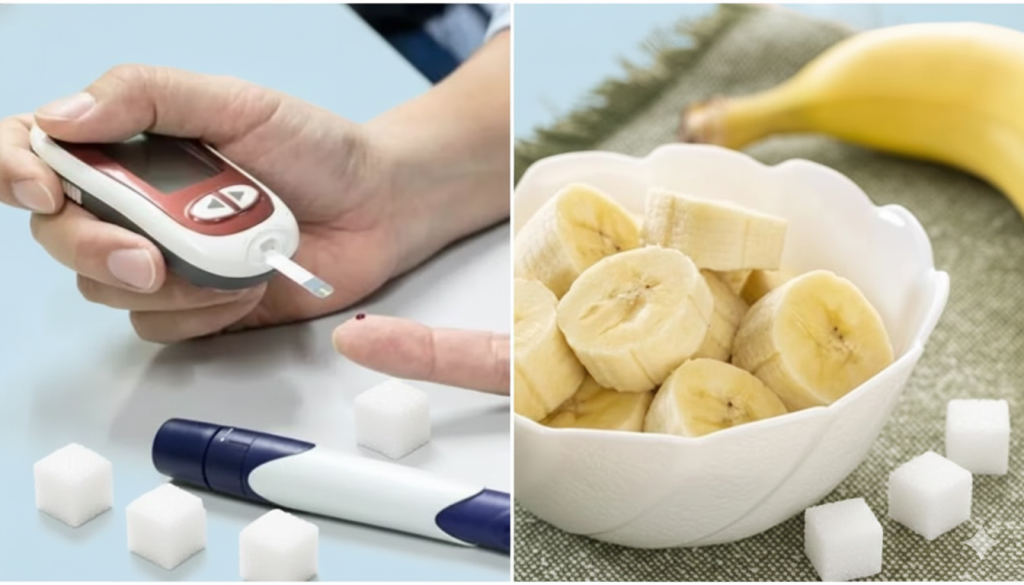
The concern mainly arises from the natural sugar content of bananas and their potential effect on blood glucose levels. While bananas do contain carbohydrates, current scientific evidence does not support complete avoidance. Instead, research highlights that portion size, ripeness stage, and food combinations play a decisive role in determining their glycemic impact.
This article explores the scientific basis behind banana consumption in diabetes, explains how ripening changes nutritional composition, presents a nutritional comparison across ripening stages, and summarizes key clinical evidence to help diabetics make informed dietary choices.
Understanding Diabetes and Blood Sugar Response
Diabetes mellitus especially Type 2 diabetes is characterized by impaired insulin action or insulin secretion, leading to chronically elevated blood glucose levels. Carbohydrates have the most immediate impact on post-meal blood sugar, but not all carbohydrates behave the same way in the body.
The glycemic response to a food depends on several factors, including the type of carbohydrate, fiber content, processing, ripeness, portion size, and whether the food is consumed alone or with protein and fat.
Bananas contain natural sugars, dietary fiber, resistant starch (in unripe forms), potassium, vitamin B6, and bioactive compounds, making their metabolic effect highly dependent on ripeness stage.
Glycemic Index and Glycemic Load of Bananas
The glycemic index (GI) measures how quickly a carbohydrate-containing food raises blood glucose levels compared to pure glucose. Bananas generally fall into the low to moderate GI range, but this varies with ripeness.
- Green (unripe) banana: low GI
- Ripe yellow banana: moderate GI
- Overripe banana: higher GI
More important for diabetics is glycemic load (GL), which accounts for portion size. A small banana (around 100 g) has a moderate glycemic load, making it suitable for people with diabetes when eaten in controlled portions.
Why Banana Ripeness Matters for Diabetics
During ripening, bananas undergo enzymatic changes where starch is gradually converted into simple sugars such as glucose, fructose, and sucrose. This natural process explains why ripe bananas taste sweeter and are easier to digest but also why they raise blood sugar more quickly.
Key nutritional changes during ripening include:
- Decrease in resistant starch
- Increase in free sugars
- Softer texture and higher digestibility
- Changes in antioxidant profile
As a result, slightly green or semi-ripe bananas are metabolically more suitable for diabetic patients compared to fully ripe or overripe bananas.
Types of Banana Based on Ripening Stages
Banana ripening is commonly divided into six stages based on peel color and texture:
- Stage 1 – Fully Green: Firm, starchy, very low sugar
- Stage 2 – Pale Green: Mostly green with slight softening
- Stage 3 – Green-Yellow: Balanced starch and sugar
- Stage 4 – Yellow with Green Tips: Nutritionally balanced
- Stage 5 – Fully Yellow: Sweet and easily digestible
- Stage 6 – Yellow with Brown Spots: Very sweet, high sugar
Nutritional Value of Bananas by Ripening Stage
Below is an approximate nutritional comparison per 100 g edible portion. Values may vary slightly depending on banana variety and growing conditions.
| Ripening Stage | Total Carbohydrates (g) | Sugars (g) | Resistant Starch/ Fiber (g) | Glycemic Impact | Key Highlights |
| Stage 1 – Green | ~23 | 6-7 | 6-8 | Low | Very high resistant starch |
| Stage 2 – Pale Green | ~23 | 8-9 | 5-6 | Low-Moderate | Supports gut health |
| Stage 3 – Green-Yellow | ~22 | 10-11 | 4-5 | Moderate | Balanced energy release |
| Stage 4 – Yellow with Green Tips | ~22 | 12-13 | 3-4 | Moderate | Ideal for diabetics |
| Stage 5 – Fully Yellow | ~22 | 14-15 | 2-3 | Moderate-High | Quick energy source |
| Stage 6 – Spotted Yellow | ~21 | 16-17 | <2 | High | Highest sugar content |
Potassium, vitamin B6, magnesium, and most micronutrients remain relatively stable, while fiber quality and sugar concentration change significantly.
Green Bananas and Resistant Starch: Why They Matter
Green bananas are rich in resistant starch, a type of carbohydrate that escapes digestion in the small intestine and behaves like dietary fiber. Resistant starch offers multiple benefits for people with diabetes:
- Slows glucose absorption
- Improves insulin sensitivity
- Reduces post-meal blood sugar spikes
- Enhances satiety
- Supports gut microbiota health
Clinical Evidence on Green Banana Biomass
The benefits were largely attributed to the high resistant starch content and its positive effect on insulin signaling and gut fermentation. A 2019 clinical study evaluating green banana biomass supplementation in prediabetic and Type 2 diabetic individuals reported:
- Reduction in HbA1c levels
- Decrease in body weight and fat mass
- Improved metabolic control
Clinical Studies on Banana Consumption in Diabetes
Banana Intake and Glycemic Safety
A controlled dietary study examining daily banana consumption (approximately 250 g per day, or 1-2 medium bananas) in people with Type 2 diabetes found no worsening of fasting blood glucose or HbA1c when intake was portion-controlled. In some participants, lipid profiles improved. This supports the idea that moderation, rather than elimination, is key.
Fruit Intake and Diabetes Complications
Importantly, the benefits are linked to whole fruits, not fruit juices. Large observational studies show that moderate whole-fruit intake (around 100-150 g per day) is associated with:
- Reduced cardiovascular risk
- Lower diabetes-related complications
- Improved antioxidant status

Are Bananas Better or Worse Than Other Fruits for Diabetics?
Compared to several tropical fruits such as mangoes, chikoo, or grapes, bananas especially when slightly unripe offer:
- Lower fructose content
- Better fiber and resistant starch profile
- Greater satiety per serving
- Easier portion control
When selected wisely, bananas can be as safe as or safer than many commonly consumed fruits for diabetic individuals.
Practical Recommendations for Diabetic Patients
- Portion Control: Limit intake to a small banana (around 100 g) or half a large banana per serving.
- Choose the Right Ripeness: Slightly green or yellow bananas with green tips are preferable.
- Pair with Protein or Fat: Combine bananas with nuts, seeds, yogurt, or peanut butter to reduce glycemic spikes.
- Avoid Eating Alone: Do not consume bananas on an empty stomach.
- Timing Matters: Include bananas as part of a meal or balanced snack.
- Monitor Blood Sugar: Individual responses vary—self-monitoring helps personalize intake.
Common Myths About Bananas and Diabetes
Myth: Diabetics must avoid bananas completely
Fact: Bananas can be safely consumed in moderation with proper selection.
Myth: Brown bananas are best for diabetics
Fact: Overripe bananas contain more sugar and may raise blood glucose faster.
Myth: All fruits increase blood sugar equally
Fact: Fiber, ripeness, and portion size significantly influence glycemic response.
Clinical Evidence Summary
Scientific research shows that:
- Green bananas improve insulin sensitivity
- Controlled banana intake does not worsen HbA1c
- Moderate fruit consumption reduces diabetes complications
- Ripeness strongly affects glycemic response
Summary
Bananas are not forbidden for diabetic patients. When consumed in small portions, chosen at the right ripeness, and combined with protein or fat, bananas can fit into a healthy diabetic diet.
Evidence suggests that green and semi-ripe bananas, due to their resistant starch content, may even support better metabolic control. The key is mindful consumption, guided by portion size, timing, and individual blood sugar response.
Disclaimer: This article is for educational purposes only and does not substitute professional medical advice. Consult a qualified healthcare professional for further guidance.
Read Articles Below for More Health Update