
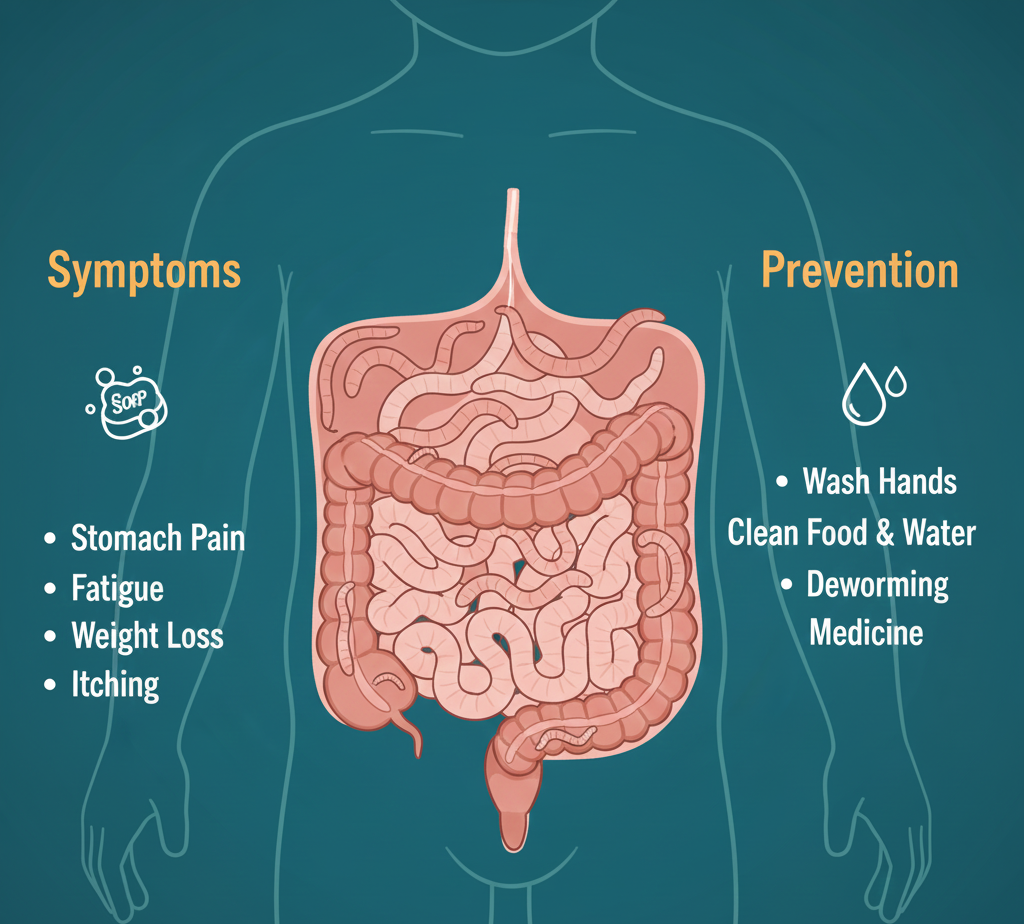
Intestinal worm infections are among the most common childhood health problems worldwide, particularly in low- and middle-income countries. According to the World Health Organization (WHO), more than 1.5 billion people, many of them children, are affected by soil-transmitted helminths globally. These infections can interfere with nutrient absorption, appetite, and overall growth, potentially leading to undernutrition, anemia, and delayed physical development.
This article explains the impact of intestinal worms on child growth and nutrition, the types of worms, with a special focus on threadworm (pinworm), and provides evidence-based guidance on symptoms, treatment, home care, and prevention.
Impact of Intestinal Worms on Child Growth and Nutrition
Intestinal worms can affect children’s health through several biological mechanisms:
- Reduced appetite and food intake
- Impaired absorption of nutrients such as iron, protein, and vitamin A
- Chronic intestinal blood loss (especially with hookworm infections)
- Increased metabolic demand due to ongoing infection
What does research show?
Multiple studies and systematic reviews indicate that moderate to heavy worm infections are associated with stunting, underweight, and iron-deficiency anemia, particularly in settings with poor sanitation and food insecurity. Hookworm infections, in particular, are strongly linked to anemia due to chronic blood loss.
However, large Cochrane Reviews (2019) suggest that mass deworming alone has limited average impact on height and weight gain in all populations. The greatest benefits are seen when deworming is combined with adequate nutrition, clean water, sanitation, and hygiene (WASH) interventions.
Key takeaway: Intestinal worms can contribute to poor growth, but deworming works best as part of a comprehensive child health strategy.
What Are Intestinal Worms? Types of Worm Infections
Intestinal worms, also known as helminths, are parasitic worms that live in the human digestive tract.
Common Types of Intestinal Worms in Children
1. Roundworm (Ascaris lumbricoides)
- Spread through contaminated food and soil
- Can cause abdominal pain, malnutrition, and intestinal blockage
2. Whipworm (Trichuris trichiura)
- Lives in the large intestine
- Linked to chronic diarrhea and growth retardation
3. Hookworm (Ancylostoma duodenale, Necator americanus)
- Enters through skin contact with contaminated soil
- Causes blood loss and iron-deficiency anemia
4. Threadworm / Pinworm (Enterobius vermicularis)
- Most common worm infection in children
- Spreads easily within households and schools
Signs and Symptoms of Threadworm (Pinworm Infection)
Threadworm infections are often mild, but symptoms may include:
- Intense itching around the anus, especially at night
- Disturbed sleep and irritability
- Difficulty concentrating due to poor sleep
- Abdominal discomfort (less common)
- Visible small white worms around the anal area or in stools
In girls, threadworms may occasionally cause vaginal itching or discharge due to migration of worms.
How Is Threadworm Spread?
Threadworm spreads through the fecal–oral route and is highly contagious.
- Eggs are deposited around the anus at night
- Scratching transfers eggs to fingers and under nails
- Eggs spread via toys, bedding, clothes, food, and surfaces
- Reinfection is common without strict hygiene measures
Eggs can survive on household surfaces for up to 2-3 weeks, making prevention challenging.
Possible Complications of Threadworm Infection
Although threadworm is usually harmless, complications can occur:
- Secondary skin infections from scratching
- Sleep disturbances affecting learning and behavior
- Vulvovaginitis or urinary irritation in girls
- Rarely, appendicitis or intestinal inflammation
When to See a Doctor
Consult a healthcare professional if:
- Symptoms persist despite treatment
- Severe anal itching disrupts sleep
- Your child has unexplained weight loss or anemia
- There is abdominal pain, vomiting, or blood in stools
- Recurrent infections occur despite good hygiene
Management and Treatment (Evidence-Based)
Medications
The most commonly recommended treatments include:
- Albendazole
- Mebendazole
- Pyrantel pamoate
These medications are safe, effective, and widely recommended by WHO and CDC. A single dose is usually given and repeated after 2 weeks to prevent reinfection from newly hatched eggs.
Important: All household members should be treated at the same time.
Care at Home: Preventing Reinfection
Effective home care is essential to stop the spread:
- Wash hands thoroughly with soap, especially after toilet use
- Keep fingernails short and clean
- Bathe children every morning during treatment
- Change underwear and bed linen daily for at least one week
- Wash clothes, towels, and bedding in hot water
- Clean household surfaces regularly
- Avoid sharing towels and nightwear
Key Points to Remember
- Intestinal worms can affect child growth and nutrition, especially in heavy infections
- Threadworm is common, highly contagious, but usually not dangerous
- Deworming medicines are effective but must be combined with hygiene measures
- Treating the whole household is essential to prevent reinfection
- Good sanitation, nutrition, and hygiene are key to long-term prevention