
What Is Curcumin?
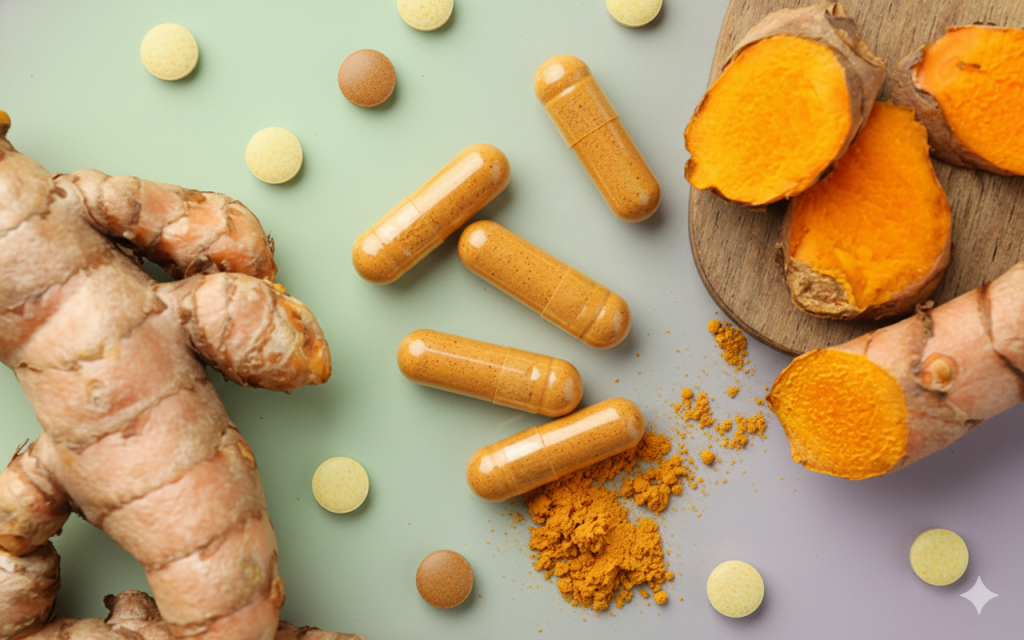
Curcumin is a naturally occurring bioactive polyphenol found in the rhizome of Curcuma longa, commonly known as turmeric. It is the primary compound responsible for turmeric’s bright yellow color and many of its medicinal properties.
Chemically, curcumin belongs to a group of compounds called curcuminoids, which include:
- Curcumin (the most active)
- Demethoxycurcumin
- Bisdemethoxycurcumin
Among these, curcumin accounts for approximately 70-80% of turmeric’s biological activity.
For centuries, curcumin has been used in Ayurveda, Siddha, and Traditional Chinese Medicine for managing inflammation, wounds, digestive disorders, and joint problems. Modern science now recognizes curcumin as a potent anti-inflammatory, antioxidant, and immunomodulatory compound.
Why Is Curcumin Important?
Curcumin is important because chronic inflammation lies at the root of many modern diseases, including:
- Arthritis
- Cardiovascular disease
- Diabetes
- Neurodegenerative disorders
- Cancer
- Autoimmune conditions
Unlike many synthetic anti-inflammatory drugs, curcumin:
- Targets multiple inflammatory pathways simultaneously
- Does not suppress immunity
- Has a favorable safety profile when consumed within recommended limits
Its multi-targeted mechanism of action makes curcumin unique among natural compounds.
Health Benefits of Curcumin – Focus on Arthritis, Pain, and Inflammation
Arthritis is a broad term covering more than 100 conditions that affect the joints and surrounding tissues, commonly causing pain, swelling, stiffness, and reduced mobility. Although the causes vary from cartilage degeneration in osteoarthritis to immune dysfunction in rheumatoid arthritis inflammation is a key factor in most forms. When inflammation becomes chronic, it leads to continuous release of inflammatory mediators that damage cartilage, thicken joint linings, and increase pain sensitivity. Curcumin, the main bioactive compound in turmeric, is especially relevant because of its strong anti-inflammatory action. By regulating inflammatory pathways at the source, curcumin helps reduce joint inflammation, relieve pain, and support better joint function in a natural and holistic way.
Protecting Against Arthritis
Arthritis includes a diverse group of joint disorders, each with distinct causes and disease mechanisms. Understanding these types helps explain why curcumin, with its broad anti-inflammatory action, is beneficial across multiple forms of arthritis.
1. Osteoarthritis (OA)
- Osteoarthritis is the most common form of arthritis and is primarily a degenerative joint disease.
- It occurs when the protective cartilage that cushions the ends of bones gradually wears down, leading to friction between joints.
- Commonly affects weight-bearing joints such as the knees, hips, spine, and hands.
- Symptoms include joint pain, stiffness (especially after inactivity), reduced flexibility, and creaking sensations.
- Risk factors include aging, obesity, repetitive joint use, previous joint injuries, and poor posture.
- Low-grade inflammation contributes to cartilage degradation and pain progression.
2. Rheumatoid Arthritis (RA)
- Rheumatoid arthritis is a chronic autoimmune disorder.
- The immune system mistakenly attacks the synovium, the lining of the joints.
- This causes persistent inflammation, swelling, warmth, and severe pain.
- Over time, untreated RA can lead to joint erosion, deformities, and loss of function.
- RA often affects joints symmetrically and may involve systemic symptoms such as fatigue and anemia.
- Inflammatory cytokines play a central role in disease progression.
3. Gout
- Gout is a form of inflammatory arthritis caused by excess uric acid in the blood.
- Uric acid crystallizes and deposits in joints, most commonly the big toe.
- Characterized by sudden, severe pain, redness, swelling, and extreme tenderness.
- Attacks often occur at night and can be triggered by diet, alcohol, dehydration, or metabolic disorders.
- Inflammation results from the immune system reacting to uric acid crystals.
4. Psoriatic Arthritis
- Psoriatic arthritis is associated with psoriasis, a chronic inflammatory skin condition.
- It causes joint pain, stiffness, swelling, and progressive joint damage.
- Can affect fingers, toes, spine, and large joints, often leading to a “sausage-like” appearance of digits.
- Inflammation may involve tendons and ligaments in addition to joints.
- Without proper management, it can result in permanent joint damage.
Curcumin protects joints through multiple molecular mechanisms:
Curcumin protects joint health by acting on multiple molecular and cellular pathways involved in the development and progression of arthritis. Unlike conventional pain relievers that mainly suppress symptoms, curcumin addresses the underlying inflammatory and degenerative processes that damage joints.
1. Inhibition of Pro-Inflammatory Cytokines
Pro-inflammatory cytokines are chemical messengers that amplify inflammation within arthritic joints. Curcumin has been shown to significantly suppress key cytokines such as Tumor Necrosis Factor-α (TNF-α), Interleukin-1β (IL-1β), and Interleukin-6 (IL-6). These cytokines stimulate the breakdown of cartilage, increase synovial inflammation, and promote swelling and pain. By downregulating their production, curcumin helps reduce joint inflammation, slows cartilage erosion, and limits the progression of arthritis-related damage.
2. Suppression of the NF-κB Pathway
NF-κB is a central transcription factor often referred to as the master switch of inflammation. When activated, it triggers the expression of numerous inflammatory genes involved in arthritis. Curcumin inhibits the activation and nuclear translocation of NF-κB, thereby preventing the transcription of inflammatory mediators such as cytokines, chemokines, and enzymes. This suppression results in reduced joint inflammation, decreased immune cell infiltration, and protection against joint tissue destruction.
3. Inhibition of COX-2 and LOX Enzymes
Cyclooxygenase-2 (COX-2) and lipoxygenase (LOX) are enzymes responsible for producing prostaglandins and leukotrienes, which are potent mediators of pain and inflammation. Curcumin inhibits both COX-2 and LOX pathways, similar to non-steroidal anti-inflammatory drugs (NSAIDs). However, unlike NSAIDs, curcumin does this without causing gastric irritation or increasing cardiovascular risk, making it a safer option for long-term joint support.
4. Protection of Cartilage Cells (Chondrocytes)
Chondrocytes are specialized cells responsible for maintaining healthy cartilage. In arthritis, oxidative stress and inflammatory mediators damage these cells and accelerate cartilage degradation. Curcumin protects chondrocytes by reducing oxidative stress, scavenging free radicals, and inhibiting matrix metalloproteinases (MMPs) enzymes that break down cartilage collagen and proteoglycans. By preserving chondrocyte function and slowing cartilage breakdown, curcumin helps maintain joint structure and mobility.
Through these combined mechanisms, curcumin offers comprehensive protection against joint inflammation, pain, and degeneration, making it a scientifically supported natural compound for arthritis management.
Curcumin Lowers Chronic Pain – Detailed Mechanism
Chronic pain often persists due to central and peripheral sensitization.
Curcumin reduces pain by:
1. Modulating Pain Signaling Pathways
- Reduces Substance P
- Suppresses TRPV1 pain receptors
- Lowers nerve inflammation
2. Reducing Neuroinflammation
Curcumin crosses the blood-brain barrier and:
- Inhibits microglial activation
- Reduces pain amplification in the central nervous system
3. Enhancing Endogenous Antioxidants
Curcumin boosts:
- Glutathione
- Superoxide dismutase (SOD)
- Catalase
This reduces oxidative damage that worsens chronic pain.
Curcumin Lowers Inflammation
Inflammation is controlled by complex signaling networks. Curcumin works at multiple levels:
1. Downregulation of Inflammatory Genes
Curcumin suppresses:
- iNOS (inducible nitric oxide synthase)
- COX-2 gene expression
- Inflammatory transcription factors
2. Reduction of Oxidative Stress
Curcumin neutralizes:
- Free radicals
- Reactive oxygen species (ROS)
- Lipid peroxidation products
3. Balancing Immune Response
Curcumin:
- Regulates T-cell activity
- Reduces autoimmune overactivation
- Preserves immune defense
Relationship Between Curcumin and Cancer
Curcumin has gained considerable attention in cancer research because of its ability to influence multiple biological processes involved in cancer development and progression. One of its key actions is the inhibition of cancer cell proliferation. Curcumin can interfere with the cancer cell cycle, slowing or stopping uncontrolled cell division that leads to tumor growth. In addition, curcumin promotes apoptosis, or programmed cell death, by activating caspase enzymes and mitochondrial pathways, helping the body eliminate abnormal cells without harming healthy tissue.
Curcumin also plays a role in limiting tumor growth by blocking angiogenesis, the process by which tumors form new blood vessels to obtain oxygen and nutrients. By inhibiting factors such as vascular endothelial growth factor (VEGF), curcumin restricts tumor nourishment. Furthermore, it helps prevent metastasis by reducing enzymes involved in tissue invasion and cancer cell migration. Chronic inflammation is a known driver of cancer, and curcumin’s anti-inflammatory action helps suppress inflammatory signaling pathways, including NF-κB. Although curcumin is not a cure or replacement for conventional cancer treatments, research supports its potential as a supportive nutraceutical that may complement standard therapies.
Other Health Benefits of Curcumin
a. Cardiovascular Health
b. Brain and Cognitive Health
c. Digestive Health
d. Metabolic and Weight Management
e. Skin Health
Turmeric Curcumin Tablets
Turmeric curcumin tablets are standardized extracts designed to deliver higher concentrations of curcumin than culinary turmeric.
Key Features of Quality Curcumin Tablets
- Standardized to 95% curcuminoids
- Enhanced bioavailability (with piperine or phospholipids)
- Free from artificial colors and heavy metals
- FSSAI-compliant labeling
Why Bioavailability Matters
Curcumin has low natural absorption. Formulations may include:
- Black pepper extract (piperine)
- Liposomal curcumin
- Curcumin phytosome
How Much Curcumin Should You Consume to Reap the Benefits?
General Evidence-Based Dosage Range
- 250-500 mg/day: General anti-inflammatory support
- 500-1000 mg/day: Joint pain and arthritis
- Up to 1500 mg/day: Short-term clinical use under supervision
Doses are often divided into 2-3 servings per day for better absorption.
FSSAI Guidelines on Curcumin Dosage (India)
Under the Food Safety and Standards Authority of India (FSSAI) regulations:
- Curcumin is permitted as a food ingredient and health supplement
- Products must comply with:
- Approved sources (Curcuma longa)
- Safe daily intake levels
- No medicinal or therapeutic claims
Key Regulatory Considerations
- Turmeric-based supplements typically contain curcuminoids within safe dietary limits
- Health supplements commonly provide up to 500 mg curcuminoids per day
- Labeling must state:
- Recommended daily usage
- Warning for pregnant or lactating women
- “Not for medicinal use” disclaimer
Manufacturers are responsible for product safety and compliance under FSSAI norms.
Possible Side Effects of Curcumin
Curcumin is generally well tolerated, but excessive intake may cause:
- Mild gastrointestinal discomfort
- Nausea or bloating
- Headache (rare)
- Increased bleeding risk at very high doses
Who Should Use Caution?
- Pregnant or breastfeeding women
- Individuals on blood-thinning medications
- People with gallbladder disorders
Always follow recommended dosage guidelines.
Clinical Studies on Curcumin
Clinical studies on curcumin provide strong scientific evidence for its effectiveness in managing inflammation and joint-related disorders, particularly osteoarthritis. Multiple randomized controlled trials have demonstrated that curcumin can reduce osteoarthritis pain with effectiveness comparable to non-steroidal anti-inflammatory drugs (NSAIDs), such as ibuprofen and diclofenac, while showing a significantly lower risk of gastrointestinal and cardiovascular side effects. Research has also shown that curcumin supplementation leads to a measurable reduction in inflammatory biomarkers, including C-reactive protein (CRP), which is commonly used to assess systemic inflammation.
In addition to pain relief, clinical trials report improvements in joint mobility, physical function, and stiffness scores among individuals taking curcumin formulations with enhanced bioavailability. Long-term safety studies indicate that curcumin is well tolerated, even with extended use, and does not cause the adverse effects often associated with chronic NSAID therapy. These findings support curcumin’s multi-pathway anti-inflammatory action and validate its role as a safe, evidence-based nutraceutical for joint and inflammatory health.
Summary
Curcumin is a well-researched natural compound known for its strong anti-inflammatory and antioxidant properties. It plays an important role in managing arthritis, joint stiffness, and chronic pain by addressing inflammation at its source rather than only relieving symptoms. Scientific studies also highlight its potential supportive role in cancer prevention by regulating inflammation and abnormal cell growth. Curcumin is generally safe and well tolerated when taken within recommended doses, making it suitable for long-term use. Backed by both traditional medicine and modern research, turmeric curcumin supplements can be a beneficial addition to a healthy lifestyle and overall wellness routine.
Disclaimer: This article is for educational purposes only and does not substitute professional medical advice. Consult qualified healthcare providers for dietary guidance.
Read Articles Below for More Health Update