

Berberis vulgaris, commonly known as barberry, has a long history of use across traditional medical systems, including Ayurveda, Unani, Traditional Chinese Medicine (TCM), and homoeopathy. In homoeopathic practice, Berberis vulgaris is primarily prescribed for renal calculi (kidney stones), urinary tract disorders, and radiating pains associated with the kidneys and bladder.
However, the evaluation of Berberis vulgaris in homoeopathy requires careful scientific contextualization. While plant-derived berberine, the principal alkaloid of Berberis vulgaris, has been extensively studied in pharmacology, homoeopathic dilutions operate under principles distinct from conventional biomedical mechanisms.
In homoeopathy, however, Berberis vulgaris is prepared through serial dilution and succussion, often beyond Avogadro’s limit, meaning no measurable molecules of berberine remain in higher potencies. This fundamental distinction is critical when interpreting clinical claims.
Why Is Berberis Vulgaris Used in Homoeopathy?
Homoeopathy operates on the principle of “Similia Similibus Curentur” (like cures like). In homoeopathic materia medica, Berberis vulgaris is described as producing symptoms related to the kidneys, urinary tract, and musculoskeletal system when tested in provings on healthy individuals.
Based on these provings, homoeopaths prescribe Berberis vulgaris for patients presenting with:
- Renal colic with radiating pain
- Gravel or calculi formation
- Burning urination
- Frequent urination with discomfort
- Lower back pain extending to thighs or hips
It is important to emphasize that these indications arise from homoeopathic symptom similarity, not from pharmacological dose-response relationships recognized in modern medicine.
Role of Berberis (Daruharidra) in Ayurveda
In Ayurveda, Berberis species primarily Berberis aristata, commonly known as Daruharidra hold an important therapeutic position and are distinct from their use in homoeopathy. Daruharidra has been described in classical Ayurvedic texts such as the Charaka Samhita and Sushruta Samhita for its tikta (bitter) and kashaya (astringent) rasa, laghu (light) and ruksha (dry) guna, and ushna virya (hot potency).
Ayurvedically, Daruharidra is valued for its Pitta- and Kapha-pacifying properties, making it useful in disorders involving inflammation, infection, and metabolic imbalance. It is traditionally indicated in prameha (urinary disorders including diabetes-related symptoms), mutrakrichra (painful urination), ashmari (urinary calculi), yakrit vikara (liver disorders), and twak roga (skin diseases). Its use in urinary conditions is attributed to its krimighna (antimicrobial), shothahara (anti-inflammatory), and mutrala (diuretic) actions.
Modern phytochemical studies have identified berberine as the major bioactive compound in Daruharidra, supporting many of its traditional uses through documented antimicrobial, hepatoprotective, and anti-inflammatory effects. Thus, in Ayurveda, Berberis is regarded as a detoxifying and metabolic corrective herb, particularly beneficial in disorders of the urinary tract, liver, and skin.
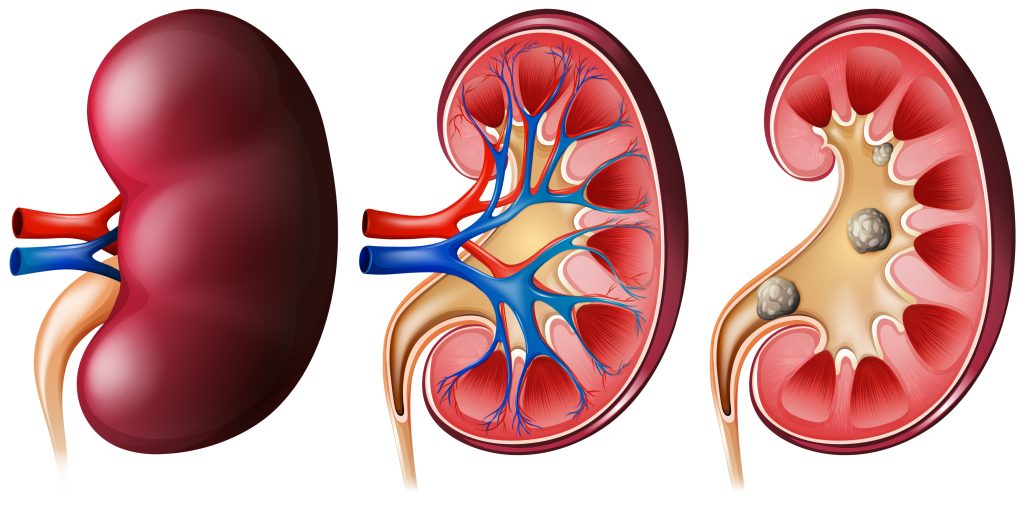
Berberis Vulgaris in Kidney Stones (Renal Calculi)
Homoeopathic Rationale
In homoeopathy, Berberis vulgaris is one of the most frequently recommended remedies for urolithiasis, particularly when pain radiates from the kidneys to the bladder, groin, or thighs. Homoeopathic texts describe its use in:
- Sharp, stitching renal pain
- Sensation of bubbling or moving urine
- Presence of sand or gravel in urine
Scientific Evidence on Kidney Stones
From a biomedical perspective, kidney stones result from supersaturation of urinary solutes, oxidative stress, inflammation, and impaired renal epithelial integrity.
At the phytochemical level, berberine has shown potential nephroprotective effects. Wang et al., Journal of Translational Medicine (2016), demonstrated that berberine reduced oxidative stress and inhibited crystal adhesion in renal tubular cells in experimental models.
Similarly, Li et al., Phytotherapy Research (2015), reported that berberine modulated calcium oxalate crystal formation by reducing renal inflammation and improving antioxidant enzyme activity.
However, these findings apply to measurable doses of berberine, not to ultra-diluted homoeopathic preparations. To date, no high-quality randomized controlled trials published in journals such as The Lancet, NEJM, or JAMA confirm the efficacy of homoeopathic Berberis vulgaris in dissolving kidney stones.
Systematic reviews published in The Lancet by Shang et al. (2005) and later updates in BMJ have consistently concluded that homoeopathy performs no better than placebo when rigorously tested.
Berberis Vulgaris in Urinary Tract Infections (UTIs)
Traditional and Homoeopathic Use
Homoeopaths prescribe Berberis vulgaris for UTIs characterized by:
- Burning or cutting pain during urination
- Sensation of residual urine
- Cloudy urine with sediment
- Associated lower back discomfort
Antimicrobial Evidence of Berberine
Modern research strongly supports berberine’s antimicrobial activity against common uropathogens. Sun et al., Frontiers in Microbiology (2018), demonstrated berberine’s inhibitory action against Escherichia coli by disrupting bacterial cell membranes and inhibiting DNA replication.
Moreover, a review by Imenshahidi and Hosseinzadeh in Phytotherapy Research (2019) highlighted berberine’s ability to reduce bacterial adhesion to uroepithelial cells.
Yet again, these antimicrobial effects are dose-dependent and observed with standardized extracts or isolated berberine not with homoeopathic dilutions. No clinical evidence from PubMed-indexed randomized trials supports homoeopathic Berberis vulgaris as a substitute for antibiotics in UTIs.
Dosage of Berberis Vulgaris for Kidney Stones
Homoeopathic Dosage Practices
In homoeopathy, Berberis vulgaris is commonly prescribed in potencies such as Q (mother tincture), 6C, 30C, or 200C, depending on practitioner assessment.
- Mother tincture (Q) contains measurable phytochemicals and is sometimes used under practitioner supervision.
- Higher potencies (30C, 200C) contain no detectable molecules and rely entirely on homoeopathic principles.
There is no universally accepted scientific dosage guideline for homoeopathic remedies, and dosing varies widely based on practitioner philosophy.
Safety Considerations
While homoeopathic high dilutions are generally considered chemically inert, mother tinctures may pose safety concerns, particularly in individuals with liver disease, pregnancy, or concurrent medication use, due to berberine’s known pharmacological activity.
How Does Berberis Vulgaris Function in the Body?
Homoeopathic Explanation
Homoeopathy proposes that Berberis vulgaris acts by stimulating the body’s self-regulatory healing mechanisms, particularly affecting the kidneys and urinary tract energetically rather than biochemically.
Biomedical Mechanisms of Berberine
From a scientific standpoint, berberine has demonstrated:
- Anti-inflammatory effects via inhibition of NF-κB signaling (Zhang et al., Biochemical Pharmacology, 2008)
- Antioxidant activity through upregulation of SOD and catalase
- Nephroprotective effects by reducing tubular injury
- Antimicrobial action against Gram-negative bacteria
These mechanisms are well documented in MDPI, Elsevier, Springer, and Wiley publications, but they apply to pharmacological doses, not homoeopathic dilutions.
When to Consider Consulting a Homeopath?
Patients often seek homoeopathic care for:
- Recurrent kidney stones
- Chronic urinary discomfort
- Adjunctive supportive therapy alongside conventional care
However, current clinical guidelines from nephrology and urology associations do not recommend homoeopathy as a primary treatment for kidney stones or UTIs. Consultation with a qualified urologist or nephrologist is essential for:
- Imaging confirmation
- Stone composition analysis
- Infection management
- Prevention of complications such as obstruction or sepsis
Homoeopathy, if chosen, should be considered complementary and not alternative to evidence-based medical care.
Clinical Evidence: What Do Reputed Journals Say?
Despite extensive research on berberine, high-quality clinical trials validating homoeopathic Berberis vulgaris are lacking.
- A study published in The Lancet, concluded that homoeopathic effects are consistent with placebo.
- British Journal of Clinical Pharmacology, reported no reliable evidence supporting homoeopathy for urinary disorders.
- The Cochrane Collaboration has repeatedly emphasized the absence of robust clinical efficacy data.
Conversely, berberine-based phytotherapy continues to be explored for renal and urinary health, with ongoing clinical interest.
NOTE: As per my experience, Berberis and Hydrangea Q Mother Tincture are more effective for kidney stones.
Bottom Line
Berberis vulgaris occupies a unique intersection between traditional medicine and modern pharmacology. While berberine, its active alkaloid, shows promising antimicrobial and nephroprotective properties in scientific studies, these effects cannot be extrapolated to homoeopathic dilutions without molecular presence.
At present:
- Scientific evidence supports berberine, not homoeopathy, for urinary health benefits.
- Homoeopathic Berberis vulgaris lacks robust clinical validation in reputed journals.
- Patients should rely on evidence-based medical care, using homoeopathy only as a complementary approach under professional supervision.
Disclaimer: This article is for educational purposes only and does not substitute professional medical advice. Pregnant women should consult qualified healthcare providers for dietary guidance.
Written By: Dr. Mohammad (Formulation Scientist)