
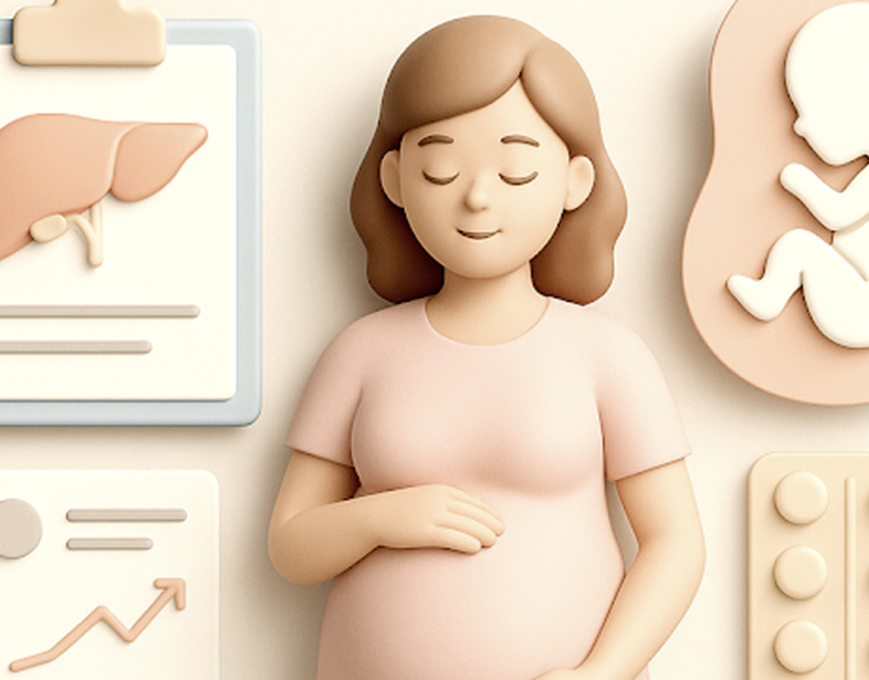
Intrahepatic pregnancy is an exceptionally rare and life‑threatening form of ectopic pregnancy in which a fertilized egg implants within the liver rather than the uterus. While most ectopic pregnancies occur in the fallopian tubes, hepatic implantation represents one of the most dangerous variants due to the liver’s rich blood supply and high risk of catastrophic bleeding.
Although only a few dozen cases have been reported worldwide, intrahepatic pregnancy carries significant maternal mortality if not diagnosed and managed promptly. This article explains what intrahepatic pregnancy is, how it occurs, its causes and risk factors, its impact on women’s health, global significance, and evidence‑based strategies for prevention.
What Is an Intrahepatic Pregnancy?
An intrahepatic pregnancy is a subtype of abdominal ectopic pregnancy in which the embryo implants directly into liver tissue (hepatic parenchyma). Under normal circumstances, fertilization occurs in the fallopian tube, and the embryo travels to the uterus for implantation. In ectopic pregnancies, this journey is disrupted.
In hepatic gestation, the embryo bypasses the uterus entirely and attaches to the liver, an organ that is not anatomically or physiologically designed to support pregnancy. Because the liver is highly vascular, even minor embryonic growth can lead to severe internal hemorrhage. For this reason, intrahepatic pregnancies are considered non‑viable and represent a medical emergency.
How Does Intrahepatic Pregnancy Occur?
Due to its extreme rarity, the exact mechanism of intrahepatic pregnancy is not fully understood. However, most clinicians agree on the following pathophysiological sequence:
- Fertilization occurs normally within the fallopian tube.
- The embryo fails to implant in the uterine lining.
- Through tubal rupture or retrograde migration, the embryo enters the abdominal cavity.
- The embryo attaches to a vascular surface, such as the liver, attracted by its large surface area and rich blood supply.
- Implantation progresses, leading to hepatic gestation.
In many reported cases, diagnosis occurs late because symptoms are atypical and imaging findings may mimic liver cysts or tumors.
Causes and Risk Factors of Intrahepatic Pregnancy
While intrahepatic pregnancy can occur without identifiable risk factors, certain conditions increase the likelihood of ectopic implantation.
1. Tubal Damage or Pelvic Surgery
- Pelvic inflammatory disease (PID)
- Previous ectopic pregnancy
- History of fallopian tube or uterine surgery
Tubal scarring interferes with embryo transport, increasing the risk of extrauterine implantation.
2. Assisted Reproductive Technologies (ART)
- In vitro fertilization (IVF)
ART procedures are associated with a higher incidence of non‑tubal ectopic pregnancies, including abdominal implantation.
3. Endometriosis
Altered pelvic anatomy and inflammation may promote abnormal implantation sites.
4. Abdominal Adhesions
Adhesions from prior surgeries or infections can redirect embryo migration toward abdominal organs.
5. Intrauterine Device (IUD) Use
Although rare, pregnancies that occur with an IUD in place are more likely to be ectopic.
6. Idiopathic Factors
In some cases, no clear cause is identified, suggesting spontaneous embryonic migration.
Clinical Presentation and Diagnosis
Symptoms
Symptoms of intrahepatic pregnancy are often nonspecific, contributing to delayed diagnosis:
- Severe or persistent upper right abdominal pain
- Shoulder pain due to diaphragmatic irritation
- Nausea or vomiting
- Signs of internal bleeding, including dizziness or fainting
- Positive pregnancy test with no intrauterine gestation on ultrasound
Diagnostic Challenges
Standard transvaginal ultrasound may fail to detect hepatic implantation. Advanced imaging is often required:
- Abdominal ultrasound
- CT scan
- MRI
Early diagnosis is critical to reduce the risk of fatal hemorrhage.
Impact of Intrahepatic Pregnancy on Women’s Health
Intrahepatic pregnancy poses severe and immediate risks to maternal health.
Life‑Threatening Hemorrhage
The liver’s dense vascular network makes it highly susceptible to rupture and massive internal bleeding, which can rapidly become fatal.
Need for Emergency Surgery
Treatment typically involves:
- Surgical removal of the gestational tissue
- Partial liver resection in severe cases
- Hepatic artery embolization to control bleeding
Risk of Misdiagnosis
Because of its rarity, intrahepatic pregnancy is often mistaken for liver tumors or cysts, delaying life‑saving intervention.
Psychological Impact
Women may experience grief, trauma, anxiety, or depression following pregnancy loss and emergency surgery, highlighting the need for post‑treatment psychological support.
Impact on the Fetus
Unfortunately, intrahepatic pregnancies are not compatible with fetal survival:
- The liver cannot provide the necessary environment for placental development.
- Most fetuses do not survive beyond early gestation.
- Clinical management prioritizes maternal survival.
Global Impact of Rare Ectopic Pregnancies
Although fewer than 30 intrahepatic pregnancies have been documented globally, ectopic pregnancies overall remain a significant public health concern.
- Ectopic pregnancies account for approximately 5–10% of pregnancy‑related deaths worldwide.
- Abdominal ectopic pregnancies carry a 4–8 times higher maternal mortality risk compared to tubal ectopic pregnancies.
- Low‑resource settings face higher fatality rates due to limited access to imaging, blood transfusions, and emergency surgery.
Improved awareness and diagnostic capacity are essential to reducing maternal mortality.
Prevention of Intrahepatic and Other Ectopic Pregnancies
While complete prevention is not always possible, several strategies can significantly reduce risk.
Early Prenatal Care
- First‑trimester ultrasound for early localization of pregnancy
- Close monitoring of high‑risk pregnancies, especially after IVF
Prompt Treatment of Pelvic Infections
- Early management of sexually transmitted infections
- Prevention of pelvic inflammatory disease
Lifestyle Modifications
- Avoid smoking, which impairs tubal function
Monitoring High‑Risk Women
Women with prior ectopic pregnancy, tubal surgery, or infertility treatment should receive early and frequent follow‑up.
Patient Education
Awareness of warning signs such as unexplained abdominal pain and dizziness can lead to earlier medical consultation.
Conclusion
Intrahepatic pregnancy is one of the rarest and most dangerous forms of ectopic pregnancy, posing an immediate threat to maternal life. Although fetal survival is not possible, timely diagnosis and urgent surgical intervention can save lives.
Healthcare professionals must maintain a high index of suspicion in women with positive pregnancy tests and unexplained abdominal pain, particularly those with known risk factors. Strengthening early prenatal care, reproductive health education, and access to diagnostic imaging especially in low‑resource settings remains critical in preventing deaths from rare but catastrophic obstetric conditions.
With increased awareness and vigilance, even the most uncommon threats in pregnancy can be identified early and managed effectively.
Read Articles Below for More Health Update